If you search "paint correction" you'll find marketing pages quoting you a four-figure service before anyone has actually looked at your paint. That's backwards. Most of the cars we see don't need full paint correction. Some do. The honest answer takes about 10 minutes to figure out, and you can do most of it in your driveway.
Customers usually call this 'car buffing,' the industry calls it paint correction. Same work, different vocabulary.
Here's how we'd actually approach it.
Some links in this post are Amazon affiliate links. As an Amazon Associate, Ultimate Detail & Rust Check earns from qualifying purchases. We only link products we actually use at the shop or would recommend to a customer.
Does your paint actually need correction? Three driveway checks
Before booking anything, run these three checks on your washed paint. They'll tell you whether you're looking at a wash problem, a clay-bar problem, or a real correction job.
1. Run a clean palm flat across the hood
Wash the car first, dry it, then run the back of your fingers (or a clean palm) flat across the hood and roof. If the paint feels gritty or rough even though it looks clean, that's bonded contamination. Iron deposits, industrial fallout, tree sap residue, rail dust. None of that comes off with a wash. It comes off with a clay bar. The clay bar I picked up recently is decent for the price if you're shopping for one. Clay bar territory is not paint correction territory. The two get conflated all the time.
2. Look at the paint under direct sun
Pull the car into direct sunlight, walk around it, look at the hood and roof from a low angle. Circular swirl marks visible in the sun mean clear coat damage from automatic car washes, dry wiping, or improper hand washing. On a black Corolla or a deep blue F-150 they're obvious. On white or silver they hide until the paint catches the light at the right angle. Visible swirls = correction territory.
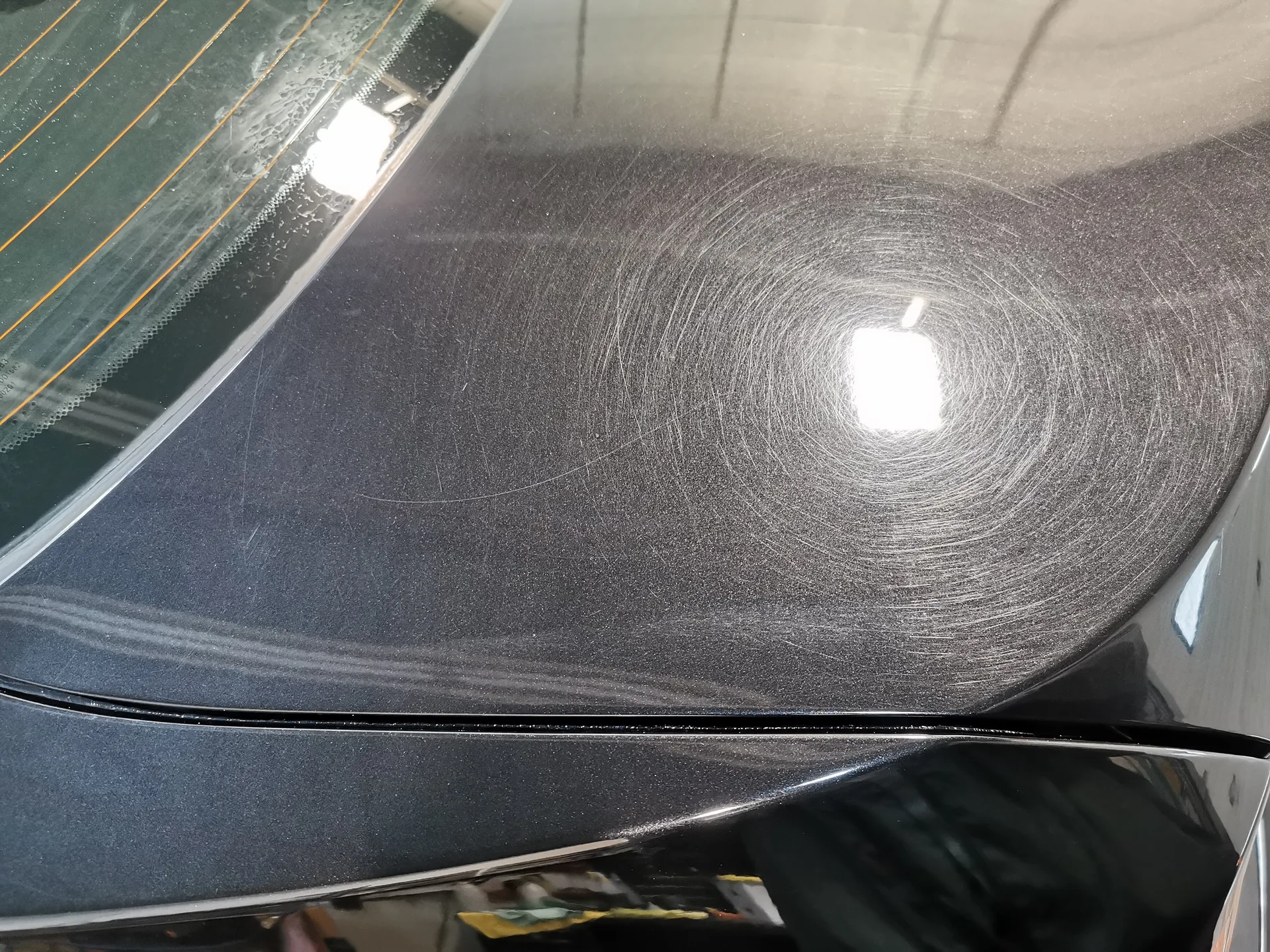
3. Check for chalky or hazy clear coat
If the paint looks dull and washing it doesn't restore the gloss, the clear coat is oxidizing from years of UV exposure. Wax won't fix it. Polish has to remove the damaged surface layer to reveal good material underneath. That's correction territory too.
If you ran all three checks and nothing turned up, you don't need correction. You need a wash and wax. Save the money.
What paint correction actually is
Paint correction is machine polishing. We're using a rotary or dual-action polisher with a graded sequence of compounds and pads to remove a thin layer of clear coat, level the surface, and eliminate the scratches and oxidation that sit above that level. If you've searched 'scratch removal' or 'remove scratches from car paint,' that's the same job when the scratch sits in the clear coat. Done right, the difference is dramatic. Done wrong or done unnecessarily, it removes clear coat you can't put back.
Clear coat is finite. A typical factory clear coat is 40 to 50 microns thick. Most corrections remove 2 to 5 microns. You can correct a vehicle multiple times in its life, but not endlessly, and not on top of body work that has thinner clear coat than factory.
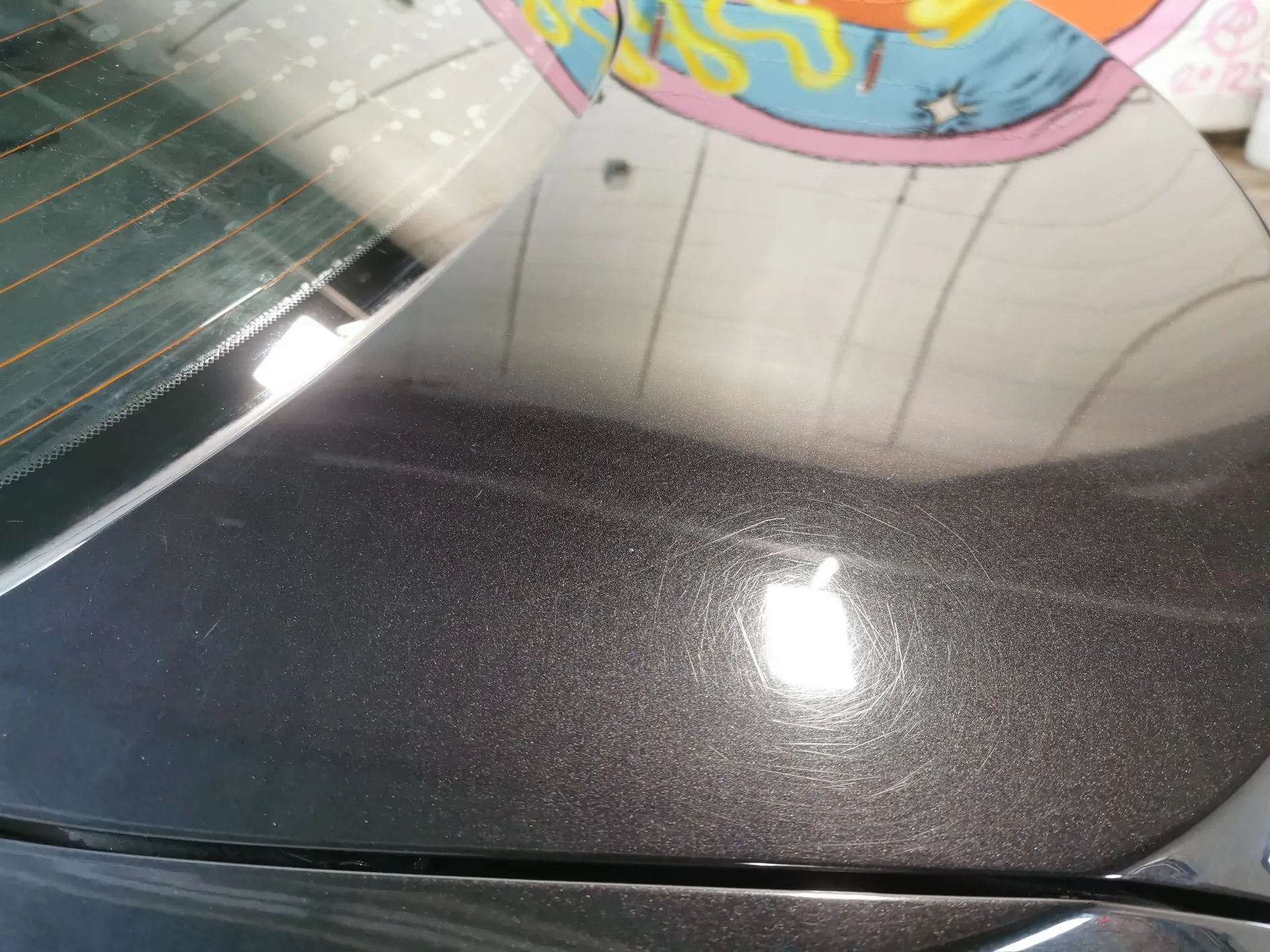
Single stage versus dual stage
Single stage uses one less aggressive compound. Right call when paint is in decent shape but has accumulated swirl marks and surface contamination over a few years. Removes less material, finishes smoother on softer paint.
Dual stage is a heavier cut compound first to address deeper scratches and bigger damage, then a finer polish to refine the finish. Removes more material, takes longer, costs more. Not appropriate for vehicles where the clear coat is already thin from previous corrections, after-market respray, or factory production-line variance.
We don't decide which one a vehicle needs from a phone call. We assess in person.
How do we figure out what your paint needs?
We look at the paint under direct light to evaluate depth and extent of the damage. We check clear coat thickness with a paint depth gauge across multiple panels. That tells us how much material we're working with and how aggressively we can correct without compromising the clear coat. We'll do a small test polish in an inconspicuous area first to see how the paint responds before committing to the full job.
We'll tell you honestly if we think correction isn't worth doing on a particular vehicle. Very thin clear coat, paint that needs a respray rather than polish, damage too deep to remove without going through the clear, are all situations where correction either can't help or isn't the right investment.
What goes on after correction
Correction removes any existing wax along with the surface material it polishes off. The paint needs immediate protection or the unprotected clear coat will start picking up new contamination right away.
Most of our paint correction jobs end with ceramic coating applied in the same appointment. Ceramic locks in the corrected finish for years and protects against the kind of contact that put the swirls there in the first place. A wax finish is the cheaper alternative but lasts months, not years. Meguiar's Hybrid Ceramic Wax is the spray-on wax I'd point a DIY customer at if they want quick ceramic-like beading without the cost of a pro coating. Canadian Tire has it for around $28, Amazon is closer to $17 for the same bottle.
When is paint correction not worth it?
Two situations where we'll tell you not to bother:
You're not planning to maintain the paint afterward. Swirl marks come back if you keep running the vehicle through automatic car washes, wiping it dry with a hand towel, or skipping the ceramic step. We'd rather have the conversation upfront than do a long correction and watch it disappear over a winter.
The damage is below the clear coat. Scratches that have gone through clear into the colour layer or primer can't be polished out. They need touch-up paint or panel respray. We'll tell you which is which when we look at it.
Book a paint correction
Paint correction pricing varies by vehicle size, paint condition, and whether it's single or dual stage. We don't quote without seeing the car. Give us a call at 905-439-2338 or book online. We're at 161 Baseline Rd E in Bowmanville, serving Oshawa, Whitby, Ajax, Courtice, Newcastle, and all of Durham Region.